A hurricane warning is on the radio, JPS power has already gone, and the family is deciding where to put the backup power. Everyone has heard the warnings about running generators near the house. So when it comes to a battery power station, the natural question is: is it safe to bring that inside, maybe even into the bedroom?
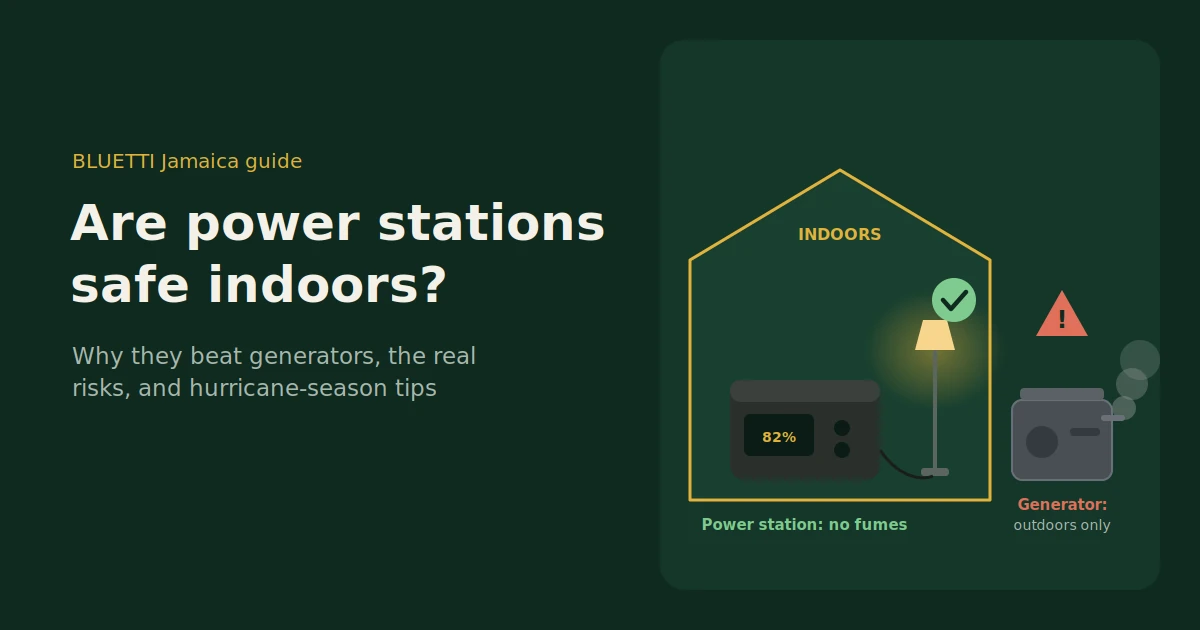
Are power stations safe indoors? Battery power stations are designed for indoor use. They produce no exhaust fumes and run quietly. But a battery that stores a lot of energy still needs sensible handling, especially in Jamaica’s heat and hurricane season.
This guide explains why power stations are safer indoors than the alternatives, the real risks to manage, and how to place and charge one safely.
The short answer
Yes. Battery power stations are designed to be used indoors. They produce no exhaust fumes or carbon monoxide, run quietly, and include built-in protections against overcharging, short circuits and overheating. The real risks are heat, water, physical damage and overloading, and you can manage all of them with sensible placement and use.
That makes a power station very different from a petrol or diesel generator, which must never be used indoors, in a garage or near open windows.
Power station vs generator vs inverter with batteries
A sealed battery power station is the only one of the three common backup options designed to sit inside your living space. Generators produce deadly carbon monoxide and must stay outdoors. Inverter systems with flooded lead-acid batteries can release hydrogen gas while charging, so they need a well-ventilated spot.
This isn’t a theoretical risk in Jamaica. In the weeks after Hurricane Melissa in October 2025, the Jamaica Fire Brigade reported about seven deaths from suspected carbon monoxide poisoning linked to generator use. The Western Regional Health Authority has warned that the only safe place for a portable generator is outside and far away from the house, and recommends carbon monoxide alarms near sleeping areas.
| Battery power station | Petrol or diesel generator | Inverter with flooded lead-acid batteries | |
|---|---|---|---|
| Exhaust fumes | None | Yes, including carbon monoxide | None |
| Gas released | None in normal use | Carbon monoxide | Hydrogen while charging |
| Indoor use | Designed for it | Never | Only in a well-ventilated area |
| Noise | Silent or near-silent | Loud | Quiet; fans may hum |
| Fuel | Electricity or solar | Petrol or diesel | Electricity |
| Maintenance | Very little | Oil, filters, servicing | Topping up water on flooded types |
| Fire risk | Low with a certified unit used properly | Hot engine and stored fuel | Wiring and charging faults |
It’s also safer than candles. After Hurricane Melissa, the Jamaica Fire Brigade urged people to avoid open flames and use battery-powered lights instead. A power station running LED lamps does exactly that.
What makes a modern power station safe
Modern power stations from reputable brands combine a stable battery chemistry, an electronic battery management system and fire-resistant casing. Together, they’re designed to stop the most common causes of battery problems, such as overcharging, overheating and short circuits, before they become dangerous.
- LiFePO4 battery cells. Most current BLUETTI power stations use lithium iron phosphate (LiFePO4) cells. This chemistry is more thermally stable than the lithium-ion types used in many phones and older power stations, which makes it less prone to overheating.
- A battery management system (BMS). BLUETTI describes its BMS as certified, with protection against overcharging, overheating and short circuits. It constantly monitors the battery and cuts power if something goes outside safe limits.
- Fire-resistant casing. BLUETTI says its casings use UL-certified, 5VA-grade high-temperature-resistant material.
- Sealed construction. Unlike flooded lead-acid batteries, there’s no liquid to top up and no gas vented in normal use.
- Clean power output. Pure sine wave inverters supply stable power suited to sensitive electronics like laptops, routers and medical devices.
These protections are why the brand, model and source of your power station matter. A certified unit from an authorised seller isn’t the same as an unbranded battery box with unknown internals.
The real risks indoors, and how to avoid them
The risks with a power station indoors come from how it’s used, not from fumes. Heat, water, physical damage, overloaded cables and uncertified units cause most problems. Each one is easy to prevent once you know what to watch for.
Heat
Jamaica is hot, and batteries don’t like heat. Many BLUETTI units are rated for operation up to around 40°C, and a room under a zinc roof, a sunny window or a closed car can exceed that.
- Keep the power station in a shaded, ventilated room.
- Leave space around the cooling vents, and don’t cover it with cloth or push it against a wall.
- Never leave it in a parked car or in direct sun.
Water and flooding
Power stations aren’t waterproof. Hurricane rain, leaking roofs and flooded floors are the biggest water risks in Jamaican homes.
- Keep it off the floor, especially in flood-prone areas.
- Keep it away from windows, sinks and bathrooms.
- If it gets wet, stop using it and don’t charge it until it’s been checked.
Damage and wear
A dropped or crushed battery can be damaged internally even if it looks fine. Stop using a unit that’s swollen, cracked, leaking, smells strange or gets unusually hot, and contact your seller.
Overloading and cheap cables
Running high-wattage appliances through thin extension cords or cheap power strips can overheat the cables, not the power station. Plug heavy loads directly into the power station, stay within its output rating, and use quality, properly rated cords.
Unbranded or uncertified units
Cheap, unbranded power stations may skip proper battery management or certified materials. Buy a recognised brand from an authorised seller, so you know what’s inside and can get warranty support.
Where to put a power station in your home
Put your power station on a stable, hard surface in a cool, dry, ventilated room, off the floor and away from water, direct sun and anything that blocks its vents. A bedroom is fine, as long as it’s placed sensibly and children and pets can’t knock it over.
A quick placement checklist:
- Hard, stable surface: a table, shelf or sturdy floor stand, not a bed, sofa or rug where it could tip or have its vents blocked.
- Off the floor if your home is at any risk of flooding.
- Ventilated: leave space around the vents, and don’t enclose it in a cupboard while it’s running or charging.
- Out of direct sun: away from windows that get strong afternoon light.
- Away from water: not in a bathroom, laundry area or next to the kitchen sink.
- Clear of curtains and clutter, so cables don’t trap heat or create a trip hazard.
- Safe from children and pets, ideally at a height or in a spot they can’t reach easily.
Is a bedroom OK? Yes. Unlike a generator, a power station produces no fumes, so it’s suitable for running a fan, lights or a CPAP in a bedroom overnight. Follow the same placement rules, and if you also use a generator outside, keep a carbon monoxide alarm near where you sleep.
Charging safely indoors
Charging indoors from a wall socket is normal and safe for a certified power station. If you charge from solar panels, keep the panels outside in the sun and run only the cable indoors. Avoid charging a unit that’s damaged, wet or unusually hot.
- From the wall: use the charger or cable that came with your power station, plugged directly into a sound wall socket.
- From solar panels: set the panels up outside, run the solar cable in through a gap that doesn’t trap or pinch it, and keep the power station inside. The best solar panels for this job are ones matched to your power station’s solar input range.
- From your car: fine while driving. Avoid running a car engine in an enclosed garage to charge anything, because car exhaust contains carbon monoxide too.
- Overnight charging: a certified power station’s battery management system stops charging when it’s full. Still, place it somewhere sensible, not under bedding or in a closed cupboard.
- Don’t charge it if it’s swollen, wet, damaged or hot to the touch.
Hurricane season safety
During hurricane season, the biggest safety gains come from preparation: charge your power station before the storm, store it high and dry, use it instead of candles for light, and never run a generator indoors or near windows. A carbon monoxide alarm adds a vital layer of protection if anyone nearby uses a generator.
Before the storm:
- Charge your power station, phones and power banks to 100%
- Move the power station to a dry, raised spot away from windows
- Bring solar panels inside so they aren’t damaged by wind
- Fit a battery-powered carbon monoxide alarm near bedrooms if you, or neighbours close by, use a generator
During and after the storm:
- Use the power station for lights, fans, phones and the fridge, instead of candles
- Keep any generator outside and well away from doors, windows and vents
- Check the power station for water damage before using it if your home flooded
- Set up solar panels outdoors only once it’s safe to go outside
Warning signs and what to do
Stop using your power station and contact your seller if it swells, cracks, leaks, smells of burning or chemicals, gets unusually hot, or shows error codes you can’t clear. Problems are rare with certified units used properly, but acting quickly matters if one does occur.
If you notice a warning sign:
- Switch it off and unplug any chargers and appliances, if it’s safe to do so.
- Move people and pets away. If there’s smoke or fire, leave and call the fire brigade on 110.
- Don’t charge or use it again until it’s been checked.
- Contact your seller with the model, the issue and photos.
- Don’t open the casing or try to repair the battery yourself.
FAQs
Are power stations safe indoors?
Yes. Battery power stations are designed for indoor use. They produce no fumes or carbon monoxide and include protections against overcharging, overheating and short circuits. Keep them cool, dry, ventilated and away from water, and buy a certified unit from a reputable seller.
Can I keep a power station in my bedroom?
Yes, as long as it’s on a stable, hard surface with space around its vents, away from water and out of reach of small children. It’s a much safer choice than a generator for running a fan, lights or a CPAP overnight.
Do power stations give off fumes?
No. Battery power stations don’t burn fuel, so they produce no exhaust or carbon monoxide. Petrol and diesel generators do, which is why they must stay outdoors and away from the house.
Is a power station safer than a generator?
For indoor use, yes. Generators produce carbon monoxide, which has caused deaths in Jamaica after recent hurricanes, and must never be run indoors. A power station can sit safely inside, though it stores less energy than a generator with plenty of fuel.
Can a power station catch fire?
Any battery can fail, but it’s uncommon with a certified unit used properly. LiFePO4 cells are more thermally stable than many other lithium batteries, and the battery management system cuts power if something goes wrong. Avoid heat, water, damage and overloading.
Is it safe to charge a power station overnight?
Yes, for a certified unit. The battery management system stops charging when the battery is full. Place it on a hard surface with clear vents, not under bedding or in a closed cupboard.
Safer backup power for your home
A battery power station gives you indoor backup power without the fumes, noise or fuel of a generator. Choose a certified model, place it somewhere cool, dry and ventilated, and charge it sensibly. It’ll keep your lights, fans and fridge running safely through outages and hurricane season.
Browse BLUETTI power stations and solar panels at BLUETTI Jamaica, with local stock, island-wide delivery, and warranty and parts handled in Jamaica. Not sure which size suits your home? Tell our team what you want to run, and we’ll help you choose a safe setup.