It’s 4:30am at the landing. The cooler is packed with ice, but by 9am, in Jamaican heat, half of it will be water. Your phone is on 30%, the headlamp is fading, and you still want a working fish finder for the run out past the reef.
Power Station for Fishing and Hunting
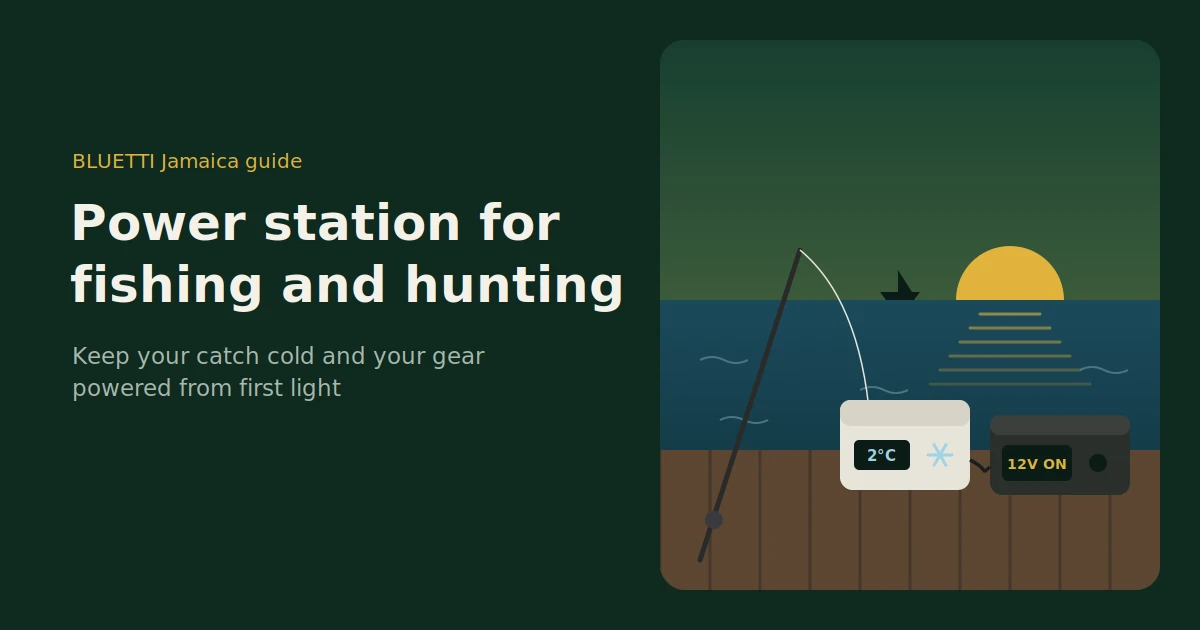
That’s where a portable power station for fishing and hunting trips earns its place. It keeps your catch cold, runs your electronics and lights up the early starts, quietly and without fuel. But it isn’t the right tool for everything on a boat, and salt water changes the rules.
This guide shows you what to power, what size to choose, and how to use it safely near the sea.
The short answer
A portable power station keeps your catch cold, runs fish finders, aerators and lights, and charges phones and radios away from mains power. For day trips, 300–500Wh is often enough. For overnight trips with a 12V fridge, choose 1,000–2,000Wh and add solar panels. Keep it dry, shaded and away from salt spray.
What it’s good for:
- Keeping fish cold with a 12V fridge or freezer instead of melting ice.
- Electronics: fish finders, GPS units, phones and radios.
- Lights for early starts and night fishing.
- Comfort at camp: a fan, phone charging and lighting.
What it’s not for: running a trolling motor or replacing your boat’s safety equipment and battery.
What you can power on a fishing or hunting trip
Most fishing gear draws very little power, so even a small power station runs fish finders, lights and phone charging for a full day. The big energy user is a 12V fridge, especially in Jamaican heat. That’s what usually decides how large a power station you need.
Estimated runtimes, using about 85% of rated capacity:
| Gear | Typical draw | Small unit (about 300Wh) | Large unit (about 2,000Wh) |
|---|---|---|---|
| 12V fridge or freezer in hot weather | 40–60 W average | About 4–6 hours | About 1–2 days |
| Fish finder | 5–15 W | About 16–50 hours | Several days |
| Aerator or livewell pump | 5–15 W | About 16–50 hours | Several days |
| LED lantern or deck light | 5–10 W | About 25–50 hours | Several days |
| 12V fan | 15–30 W | About 8–17 hours | About 2–5 days |
| Phone charge | About 15 Wh each | About 15 charges | Over 100 charges |
| Handheld radio or GPS charge | About 5–10 Wh each | Many charges | Many charges |
These are estimates. Real runtimes depend on your gear, the heat, how often the fridge is opened, and whether you run things through the 12V or AC outputs. Running 12V gear from a 12V outlet wastes less energy than going through the AC inverter.
Choosing the right size
Match the power station to the trip. Shore fishing and short day trips need only a compact unit for phones, lights and a fish finder. A full day on the boat with a 12V fridge needs a mid-size unit. Overnight camps need a larger unit, ideally with solar panels to recharge.
Shore fishing and short day trips
Phones, a headlamp or lantern, and maybe a fish finder or small pump. A compact power station of around 300–500Wh, such as the BLUETTI Elite 30 V2 (288Wh) or AC50B (448Wh), is light, easy to carry down the rocks or onto a canoe, and covers this comfortably.
Full-day boat trips
Add a 12V fridge to keep the catch cold for 10–12 hours in the heat, and you’ll want more headroom. A mid-size unit of around 700–1,000Wh suits a full day, or a larger unit if you run the fridge from before sunrise until you’re back at the landing.
Overnight fishing camps and bird-shooting trips
A fridge running day and night, lights, phones and a fan at camp add up quickly. A larger power station such as the AC200L (2,048Wh), paired with portable solar panels, can keep the camp running for a weekend.
| Trip | What you’re powering | Suggested capacity |
|---|---|---|
| Shore fishing, a few hours | Phones, lights, fish finder | About 300–500Wh |
| Full day on the boat | Plus a 12V fridge | About 700–1,000Wh or more |
| Overnight camp | Fridge, lights, fan, phones | About 2,000Wh plus solar |
Keeping your catch fresh in Jamaican heat
In Jamaican heat, ice melts fast and fish spoil quickly. A 12V fridge or freezer powered by a power station holds a steady temperature all day, with no melting ice and no water sloshing around your catch. It uses more power in the heat, so plan your capacity around it.
- Pre-chill at home. Run the fridge on mains power the night before, so the power station only has to maintain the temperature, not bring it down.
- Keep it in the shade. A fridge in direct sun works much harder. Cover it with a light-coloured towel or keep it under a canopy.
- Open it less often. Every opening lets cold air out. Plan what goes in and out.
- Combine with ice, if you like. A little ice in a well-insulated cooler, plus a fridge for the catch, gives you a backup.
- Gut and clean early. Bleeding and cleaning fish soon after catching helps them stay fresh, whatever cooling you use.
Using a power station on a boat
A power station is handy on a boat for fridges, fish finders, lights and charging, but it isn’t waterproof and it isn’t marine safety equipment. Secure it, keep it dry and out of spray, and don’t use it to replace your boat’s starting battery, bilge pump power or trolling motor battery.
Do:
- Secure it so it can’t slide or tip in a swell. Use straps or a non-slip mat in a stable spot.
- Keep it dry. Store it in a dry box, a dry bag or a covered console, out of reach of spray and bilge water.
- Keep it shaded and ventilated. Heat and closed, hot compartments shorten battery life.
- Use quality cables with secure connectors, routed away from hooks, gaffs and foot traffic.
Don’t:
- Run a trolling motor from it. Trolling motors draw high currents for long periods, and a dedicated marine deep-cycle battery is the right tool.
- Rely on it for safety equipment. Your bilge pump, navigation lights and radio should run from the boat’s own electrical system, with a properly installed battery.
- Leave it exposed on deck in rain or spray.
Recharging with solar panels on the water and at camp
With strong sun almost year-round, solar in Jamaica is ideal for keeping a power station topped up on multi-day trips. A portable folding panel at camp, or a small panel on the boat when it’s safe, can replace much of what your fridge and lights use each day.
- At camp: unfold a 100–200W portable panel in full sun, angled towards the sun, and recharge while you fish.
- On the boat: only if it can be secured safely. Loose panels can blow overboard or cast shade on your gear.
- On the drive: charge from your vehicle’s 12V socket on the way to the landing.
- Choose the best solar panels for the job: durable, weather-resistant portable panels matched to your power station’s solar input range, and able to cope with heat and salt air.
- Keep panels clean: salt spray and dust reduce output, so wipe them with fresh water.
If you run a permanent fishing hut or camp, a small fixed solar system with a larger battery can supply power every weekend without carrying anything in.
Bird-shooting season: what to know
In Jamaica, hunting mainly means the licensed game-bird shooting season, regulated by NEPA under the Wild Life Protection Act. Only licensed hunters may take part, only on approved dates, and only for four designated game birds. A power station is useful at the camp, for lights, coolers and phones.
What the rules looked like in 2026:
- A restricted season. Following Hurricane Melissa’s impact on bird populations, the 2026 season was cut from six weekends to five, with the proposed dates running from 22 August to 20 September.
- Lower bag limits. The limit per shooting session dropped from 20 birds to 15.
- Regional restrictions. NEPA set no-hunting areas in five western parishes, where hunting the bald pate (white-crowned pigeon) was also prohibited.
- Licences. Hunters need a NEPA hunter’s licence, which requires a valid firearm licence or user’s permit.
- Strict enforcement, with fines of up to $3 million reported for breaches.
Rules change every year, so check NEPA’s announcements for the next season’s dates, bag limits and restricted areas. Duck hunting and hunting any other native birds are illegal.
At a bird-shooting camp, a power station keeps drinks and food cold, charges phones, and lights up early-morning starts and evenings. Always follow firearm and wildlife laws, and the rules of the property you’re hunting on.
Safety tips near water
Water, salt and heat are the main threats to a power station on a fishing trip. Keep it dry and shaded, rinse salt off your cables, never charge it when it’s wet, and don’t leave it in a hot car between trips.
- Keep it out of the water and spray at all times, in a dry box or dry bag.
- Never use or charge it while wet. If it gets splashed, switch it off and let it dry fully before use.
- Rinse salt off cables and connectors with fresh water after a trip, then dry them.
- Avoid heat. Don’t leave it in a parked car, on a sunny deck or in a closed, hot hold.
- Keep cables tidy and away from hooks, lines and gaffs, so nothing snags or gets cut.
- Don’t overload it. Stay within its output rating.
- Stop using it if it swells, smells odd or gets unusually hot, and contact your seller.
FAQs
What size power station do I need for fishing?
For shore fishing and short trips with phones, lights and a fish finder, around 300–500Wh is usually enough. For a full day on the boat with a 12V fridge, choose around 700–1,000Wh or more. For overnight camps, a 2,000Wh unit with solar panels works well.
Can a power station run a fish finder?
Yes. Most fish finders draw only 5–15W, so even a small power station can run one for many hours. Use the 12V outlet where possible, since it wastes less energy than the AC outlets.
Can I use a power station on a boat?
Yes, for accessories like fridges, fish finders, lights and charging, as long as it’s secured and kept dry and out of spray. It isn’t waterproof, and it shouldn’t replace your boat’s own battery for safety equipment.
Can a power station run a trolling motor?
It isn’t a good idea. Trolling motors draw high currents for long periods, so a dedicated marine deep-cycle battery is the right choice.
How do I keep fish cold on a long trip?
Use a 12V fridge or freezer powered by a power station. Pre-chill it at home, keep it in the shade and open it as little as possible. Clean and bleed fish early, too.
Can I charge a power station with solar while fishing?
Yes. A portable solar panel at camp, or one secured safely on the boat, can top up the battery during the day. Jamaica’s strong sun makes solar charging very effective.
Power up your next trip
A power station won’t catch the fish for you, but it keeps your catch cold, your gear running and your phone charged from first light to the trip home. Choose the right size, keep it dry and shaded, and add solar panels for longer trips.
Browse BLUETTI power stations and portable solar panels at BLUETTI Jamaica, with local stock, island-wide delivery, and warranty and parts handled in Jamaica. Tell our team about your trips, and we’ll help you pick the right setup.